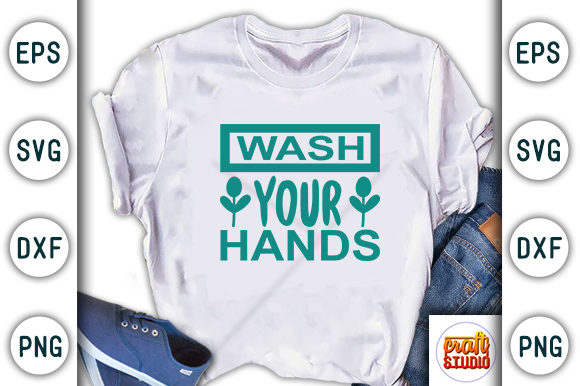
Stay Home SVG Design: Wash Your Hands Embroidery Review
A Message That Still Feels Grounded
When I first opened the vector file for Stay Home Svg Design, Wash Your Hands, the mood was immediate and surprisingly calm. It doesn’t shout. It doesn’t overdesign. The typography sits with a quiet clarity that translates well into thread and fabric. As someone who stitches everything from boutique baby items to commercial patches, I look for designs that keep their personality after three or four thread-pull tests. This one holds visual weight without being cluttered, and that’s exactly what many embroidery small business owners want in a practical digital asset.
The composition leans on clean lettering, a phrase we all recognize, and a shape that can work on a chest pocket, a tote bag, or even a structured cap if you scale it right. The fact that you receive EPS Files, SVG Files, PNG Files, and DXF Files means you aren’t locked into one workflow. For embroidery use, I immediately think about how the SVG will behave in digitizing software. Smooth curves, even spacing, and no awkward trapped islands — that’s what I’m hoping for when I pull this into my machine embroidery design pipeline.
First Stitch Test: Turning Vectors Into Thread
This is not a ready-made embroidery file. You won’t find a PES or DST inside the ZIP. So from a graphics standpoint, it’s a canvas — a clean starting point. I took the SVG into my digitizing program, assigned satin stitches to the main lettering, and used a light fill stitch for any decorative backdrops. The gentle curves meant fewer nodes to clean up, which is always a relief when you’re working against a client deadline.
I ran a test on a medium-weight cotton scrap. I wanted to see how the kerning would hold up in thread. Small adjustments were needed to thicken some thin strokes — typical when converting a T-Shirt Designs asset into an embroidered piece. After setting proper pull compensation, the text read clearly. The phrase “Wash Your Hands” came through with enough air between letters, so it didn’t turn into a blob after stitching. That’s crucial for a design intended for handmade products that will be looked at up close.
A Real Project: The Boutique Linen Towel
Let me walk you through a real scenario. A client wanted a set of embroidered kitchen towels for a small shop launch — something modern but not trendy, with a public-health message that felt kind rather than bossy. I chose a natural linen-cotton blend, light oatmeal base, and positioned Stay Home Svg Design, Wash Your Hands centered near the bottom hem.
I used a 4x4 hoop, scaled the design to about 3.2 inches wide, and selected a dark charcoal thread for the lettering. The result after finishing? The message felt like a thoughtful reminder, not a sign. It stitched out with elegant simplicity. The edges of the satin columns were crisp because I took the time to test on scrap fabric first. That’s a step I never skip, no matter how straightforward the digital file looks.
As a personalized gift option, this worked beautifully wrapped with a wooden soap dish. I’ve also seen variations on simple cotton tote bags, where the design floats unboxed against unbleached canvas. Customers at a craft fair would slow down for that — it’s familiar, it’s approachable, and it stirs a small emotional response.
Where the Design Shines on Fabric
Based on my test runs, here are the products where Stay Home Svg Design, Wash Your Hands really adds value:
- Kitchen towels and tea towels — the flat weave supports small lettering well, and the theme is naturally at home here.
- Everyday tote bags — cotton or canvas carries the message as a gentle statement piece.
- Simple apron bibs — placed near the top, the design adds a boutique cook’s touch without overpowering the garment.
- Pillow covers — in a reading nook or entryway bench, the sentiment gives off a cozy, stay-home vibe.
- Blanket corners or nursery decor — scaled down, it becomes a sweet safety-themed accent for a baby’s space.
- Light sweatshirts — on the left chest or a small center placement, it works for casual custom apparel.
In all these cases, the design’s success depends as much on stabilizer choice and fabric texture as it does on thread color contrast. I leaned toward matte polyester threads; they give a soft sheen without reflecting too much light on unbleached fabrics.
When It’s Best to Hold Back
I have to be honest about limitations, because no digital embroidery file asset translates the same way on every surface. Here’s where I’d think twice before using this design:
- Very small hoop sizes — if you try to force it into a 2x2 hoop, the lettering will lose legibility. Fine details need room to breathe.
- Stretchy fabrics — a lightweight jersey tee requires heavy cut-away stabilizer and possibly a topper. Without that, stitching sinks in and letters distort.
- Dark, heavily textured fabrics — the fine voids inside characters can disappear. Test on black fleece before promising a client anything.
- Curved surfaces like structured caps — the word layout may need significant shaping. It can be done, but expect to re-digitize the arc.
- Products that see aggressive washing — if you embroider this on a gym towel, the small satin edges may fray faster. Use a dense underlay on high-wear items.
I also recommend running a black and white mockup printout before stitching. Paper shows you contrast issues you might miss on a screen. Many Etsy sellers and small shop owners skip this step, and a month later they wonder why their product photos look flat.
How the Design Shapes Buyer Perception
When a customer picks up a finished product bearing Stay Home Svg Design, Wash Your Hands, they don’t just see a phrase. They feel a sense of care, of mindfulness, maybe even a small nostalgic pull. That emotional layer matters more than stitch count in handmade product photography. It’s the difference between a generic convenience item and a personalized gift that someone reaches for naturally.
In my experience, designs like this boost customer trust when they are used consistently across a small business product line. A maker who pairs this with soft color palettes and clean packaging sends a signal: “I think about the small things.” That’s a powerful differentiator in a crowded craft business marketplace. It also raises the giftability factor — recipients recognize the sentiment instantly, and it rarely feels off-trend.
I’ve also noticed that printable mockup previews with this design tend to perform well in listings. Because the script is straightforward, customers can easily imagine it on their own bag, towel, or sweatshirt. That visualization drives engagement and reduces decision fatigue.
Practical Notes for Crafters and Small Shops
If you’re an embroidery creator or a digital product seller considering this asset, take a few careful steps before you list or ship:
- Test stitch always. Even the cleanest vector needs tweaking once it’s a running stitch or satin stitch. Use similar fabric to your final project.
- Check thread color contrast. Off-white on cream reads softer; navy on oatmeal pops more. Test two or three combinations on a small patch.
- Review your stitch density. Too dense and the fabric puckers; too light and the design looks airy and unfinished.
- Confirm hoop size. Measure your digitized file margins. Allow at least half an inch of extra space around the design for hoop clearance.
- Watch tiny lettering. If “Wash Your Hands” has fine serifs, you might need to simplify them at smaller sizes.
- Use proper stabilizer. For towels, a tear-away with a water-soluble topper prevents loops from swallowing stitches. For knits, cut-away is your friend.
- Clarify licensing. The ZIP includes vector and image files, but that doesn’t automatically grant commercial embroidery rights for finished products. Reach out to the seller or read the terms. You want to be certain you can sell custom apparel, embroidered patches, or boutique merchandise made with this design.
- Make a physical sample mockup. Not just a screen preview. Stitch it, wash it, stretch it. Your customers will thank you for the honesty.
A Design That Feels Ready for Real Stitch Work
After several runs, I’m comfortable recommending Stay Home Svg Design, Wash Your Hands to makers who are willing to put in the digitizing time. It isn’t a drag-and-drop machine embroidery design file, but as a graphics asset, it offers a steady foundation. For applique design adaptations it works especially well — you can treat the main lettering as an applique piece and add a satin border, which reduces stitch count and gives the fabric a plush dimension.
What I value most is the quiet confidence of the phrase. It doesn’t try to be clever or ironic. On a handmade product, that sincerity connects. Whether you’re stitching a batch of tea towels for a holiday market, preparing a custom apparel order for a small shop, or making a meaningful baby embroidery keepsake, this design will do its job if you do yours — test, adjust, and respect the fabric.
And isn’t that what good embroidery craft is all about? Thoughtful planning turns a digital vector into a tangible moment. In a time when customers seek comfort and practicality, Stay Home Svg Design, Wash Your Hands stitches that message right where it belongs.