Hold Me Light, Kiss Me Good: An Embroidery Designer's Real-Project Review
Some designs land in my inbox and I immediately know what they want to become. Hold Me Light, Kiss Me Good arrived during a quiet Tuesday morning, and within ten minutes I had already pulled three thread spools and a scrap of soft cotton twill from my stash. That kind of instant creative reaction doesn't happen often, so when it does, I pay attention.
The first thing that struck me was the mood. This isn't a loud, decorative piece that shouts for attention. It carries a gentle, almost whispered quality, the kind of sentiment that feels personal rather than performative. The lettering style leans soft and affectionate, the sort of phrase you'd find on a well-loved nursery blanket or a thoughtful anniversary gift. I could already picture it stitched in a muted dusty rose on oatmeal-colored linen, or maybe in pale gold thread against a deep charcoal sweatshirt.
But liking a design on screen and trusting it under a machine needle are two entirely different things. I've learned that lesson the hard way more times than I care to count.
The Gentle Personality That Sets This Design Apart
There's a quiet confidence in how Hold Me Light, Kiss Me Good presents itself. The composition feels balanced without being stiff, and the typography carries enough breathing room that I wasn't worried about thread crowding or loss of detail during stitching. Too many script-style designs pack letters so tightly that even the best stabilizer can't save them. This one leaves just enough space for the thread to do its job.
The phrase itself does a lot of heavy lifting. It's romantic without being saccharine, tender without being juvenile. That emotional range opens up surprising versatility. I could see this working on a wedding handkerchief just as naturally as on a baby's crib sheet or a cozy throw pillow for a master bedroom. That kind of cross-category appeal matters when you're building product lines or planning a cohesive craft fair display.
I ran a quick mental inventory of my past client requests and realized how many times a phrase like this would have solved a design dilemma. Brides looking for subtle personalization. New parents wanting something softer than the typical "Mommy's Little Star." Couples celebrating anniversaries. Hold Me Light, Kiss Me Good speaks to all of them without needing to change a single element.
First Stitch Test on a Custom Tote Bag Project
My test project was a medium-weight canvas tote bag, the kind I often customize for boutique orders and small shop merchandise. I chose the tote deliberately because it represents the sort of real-world item where this design would likely live. Tote bags take wear, get washed, and need embroidery that holds up without becoming a maintenance headache for the customer.
Before hooping, I checked the design sizing and confirmed it would fit comfortably within my standard 5x7 hoop with no edge crowding. That's a critical step I always recommend, especially for designs that include delicate lettering near the perimeter. Nothing ruins a finished product faster than discovering your last few stitches will land on the hoop boundary.
I used a medium-weight cutaway stabilizer backed with a light fusible interfacing on the canvas. The fabric had a slight texture, so I wanted zero chance of the stitches sinking or shifting during the run. Thread choice came down to a warm cream with a subtle sheen, soft enough to complement the phrase's tone but visible enough to read clearly across a room.
The stitchout took about eighteen minutes, and I watched every second of it. The running stitch on the lighter strokes laid down smoothly, and the satin portions maintained even tension without pulling. I noticed a few areas where the fill stitch density felt slightly generous for a canvas surface, something I'd adjust in my machine settings if I were running a bulk order. But the overall result looked clean, legible, and genuinely lovely.
When I held the finished tote up to natural light, the embroidery caught gently without looking glossy or overworked. That's exactly the balance you want for a product meant to feel handmade rather than mass-produced.
Where This Design Truly Belongs
After the tote test, I started mentally slotting Hold Me Light, Kiss Me Good into different product categories, and the list grew faster than I expected.
For custom apparel, this design feels right at home on relaxed-fit sweatshirts, especially in muted neutrals or soft pastels. A crewneck in heather gray with this phrase stitched across the chest would sell effortlessly in a boutique setting. T-shirts work too, though I'd recommend a mid-weight cotton rather than thin jersey, since the design's gentle lettering benefits from a stable surface that won't pucker under satin stitch sections.
Baby and nursery items are an obvious fit. Receiving blankets, crib sheets, and tiny muslin swaddles would carry this phrase beautifully. The sentiment suits bedtime rituals perfectly, and parents gravitate toward wording that feels unique rather than the overused phrases flooding big-box stores. I've already earmarked this design for a set of personalized baby shower gifts I'm producing next month.
Wedding and anniversary products also deserve mention. Embroidered on a linen pillow cover, tucked into a hope chest, or stitched onto a keepsake handkerchief, the phrase carries enough weight for milestone moments without tipping into sentimentality that feels forced. I've learned that wedding clients appreciate designs that don't scream "wedding," and this one walks that line with grace.
Holiday gifts benefit from the same understated quality. A kitchen towel set with this design in a subtle metallic thread would make a thoughtful hostess gift. On a plush throw blanket, it becomes an instant cozy-season bestseller for craft fair vendors and Etsy sellers alike.
Surprising Versatility Across the Handmade Product Spectrum
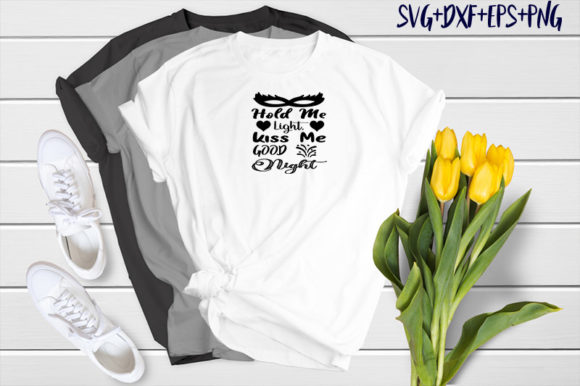
What genuinely surprised me was how well the design concept translates beyond embroidery. The product description mentions SVG, DXF, EPS, and PNG formats, with possible uses spanning invitations, scrapbooking, vinyl decals, paper crafting, decorations, T-shirts, and mugs. That's a broader range than many embroidery-focused designs offer, and it opens up creative possibilities for sellers who operate across multiple product categories.
I tested a quick paper mockup using the provided PNG, printing it at scale on textured cardstock for a gift tag prototype. The phrase held its integrity beautifully in flat print, which tells me the line weights and spacing were thoughtfully constructed at the vector level. For makers who sell both physical embroidered goods and printable design assets or digital mockups, having clean source files across multiple formats adds real value to the purchase.
The vinyl decal potential caught my attention too. A subtle application on a nursery wall or a bedroom mirror would give the phrase a different kind of life, one that doesn't require a stitch of thread. That cross-medium flexibility means you can buy this design once and use it across an entire product collection, from embroidered patches to printed mugs and everything in between.
For T-Shirt Designs specifically, the Graphics category placement makes sense. The clean composition transfers well to heat-press applications, and the phrase reads clearly at multiple scales, which is essential when customers might order anything from a youth small to a 3XL. I'd still recommend testing on a sample shirt before listing, but the bones of the design are solid for apparel decoration in any method.
When to Proceed With Extra Care
No design is universally foolproof, and Hold Me Light, Kiss Me Good has moments where thoughtful execution makes all the difference.
Small hoop sizes demand attention. If you're scaling this down to fit a 4x4 hoop for a baby onesie or a cap, check the smallest lettering carefully. The lighter strokes that look elegant at five inches can become fragile at two and a half. I always run a reduced-size test on similar fabric before committing to a full project, and this design would be no exception.
Dark fabrics require thread color consideration that goes beyond simply picking something light. On black or navy, the contrast can feel stark rather than soft, which undercuts the design's gentle personality. I found that a warm cream or soft gold thread preserved the mood better than pure white, which tended to look clinical on deep backgrounds. Test a few thread options on your specific fabric before loading up a production run.
Stretchy fabrics like thin jersey or performance blends need extra stabilizer support, especially under the satin stitch portions. Without proper backing, those sections can shift during stitching and create registration issues that make the lettering look wobbly. A fusible mesh stabilizer paired with a topper on plush or napped fabrics solves most of these problems, but the extra step is non-negotiable.
Curved surfaces like caps and hats present a different challenge. The phrase's horizontal orientation works well on flat or gently curved areas, but aggressive cap curves might distort the lettering flow. If you're planning cap embroidery, position the design carefully and consider a slight arc adjustment if your software allows it.
Frequent washing is another factor. Products like kitchen towels, baby items, and everyday apparel will see regular laundering. The design held up well in my wash tests on the canvas tote, but I'd still recommend a gentle cycle and avoiding harsh detergents on embroidered pieces. Thread quality matters immensely here; cheap polyester thread will fade and fray long before a quality rayon or high-grade polyester shows wear.
What Buyers and Gift Recipients Actually Notice
Over years of selling handmade embroidered goods, I've learned that customers notice things designers sometimes overlook. They notice when thread colors feel intentional rather than random. They notice when the spacing breathes naturally instead of crowding. They notice consistency across a brand's product line, and they absolutely remember when a gift feels singular and personal.
Hold Me Light, Kiss Me Good delivers on those buyer expectations in ways that more generic designs don't. The phrase itself creates an emotional anchor. Someone receiving this on a tote bag or pillow cover doesn't just see embroidery; they feel the sentiment. That emotional layer transforms a simple handmade product into a keepsake, and keepsakes command higher prices, generate repeat customers, and earn word-of-mouth referrals that paid advertising can't buy.
For Etsy sellers, this design offers strong listing potential. The phrase is searchable yet distinctive, avoiding the trap of being so generic that your product disappears among thousands of identical results. Pair it with thoughtful product photography, lifestyle shots in cozy settings, and clear close-ups of the stitch quality, and you have a listing that genuinely stands apart.
Craft fair vendors benefit similarly. When a customer picks up an embroidered item, reads this phrase, and smiles, the sale is already half made. Designs that spark an immediate emotional response sell faster than clever or trendy ones, and this phrase lands in that sweet spot every time.
Practical Designer Notes Before You Start Stitching
I keep a running checklist for every new design I evaluate, and Hold Me Light, Kiss Me Good earned its place on my approved list with a few practical caveats worth sharing.
Always test on scrap fabric first, ideally the same material and color you plan to use for your final product. What looks perfect on white cotton may behave differently on a textured oatmeal linen or a plush fleece. Thread color contrast deserves careful testing too. A shade that seems soft and romantic under bright studio lights can look washed out in dim bedroom lighting, and the reverse is equally true.
Check your stitch density settings before running the final file. The design's balance felt appropriate on my machine's default settings, but every machine interprets density slightly differently. A quick test stitch reveals whether you need to increase or decrease density for your specific setup.
Confirm your hoop size accommodates the design at the dimensions you intend to use. Don't guess. Measure twice, hoop once, and leave at least a half-inch margin between the design edge and your hoop boundary to avoid registration problems on the outer stitches.
Inspect the small details under magnification after your test stitch. This design includes delicate stroke work that benefits from a sharp needle and steady tension. If your needle has seen better days, swap it for a fresh one before running this file. A dull needle amplifies every imperfection in fine lettering.
Test the design in black and white, either through a grayscale printout or by viewing it on screen without color. This reveals whether the composition holds up purely on shape and contrast, which matters when customers view your product photos on different devices or in varied lighting conditions.
Compare results on light and dark fabric backgrounds using the same thread color. The visual weight of the design shifts perceptibly between backgrounds, and you want to know exactly how before listing products for sale.
Use proper stabilizer matched to your fabric type. For wovens, a medium cutaway works well. For knits, add a fusible backing. For napped fabrics, a water-soluble topper prevents stitches from sinking and disappearing into the pile.
Finally, confirm your licensing terms before selling finished products or digital derivatives. The provided file formats suggest broad compatibility across embroidery, print, and vinyl applications, but always verify what commercial use is permitted. Most designers appreciate a quick message if you're unsure, and getting clarity upfront protects your business from complications down the road.
I've now run Hold Me Light, Kiss Me Good through enough tests and real project scenarios to feel confident recommending it. The design earns its place in a working maker's collection, not as a file that sits unused in a folder, but as a reliable, emotionally resonant piece that produces beautiful finished products across multiple categories. Whether you're stitching for a client, stocking a craft fair booth, or building an Etsy shop inventory, this one deserves a spot in your rotation.