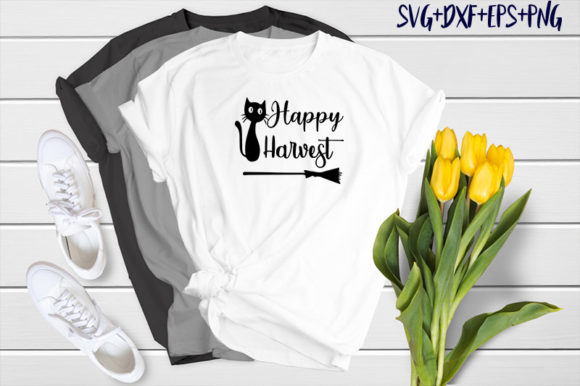
Halloween Design Happy Harvest
There’s a moment when you first unzip a design folder and the whole mood of a piece lands before you even place it in a hoop. With Halloween Design Happy Harvest, that mood is immediate. It’s not eerie or ghastly. It’s warm, golden, and gently nostalgic. Looking at the layout and the thematic elements, I immediately pictured a late-September afternoon, the air crisp, and a stack of freshly sourced tea towels waiting on my worktable for a seasonal retail push. This one isn’t just a Halloween graphic. It’s a harvest celebration that lives comfortably from early fall through Thanksgiving.
First Impressions and the Harvest Mood
The visual personality of this design feels hand-illustrated and approachable. The name says it clearly: happy harvest. The playful yet balanced composition suggests pumpkins, perhaps some wheat sprigs, leaves, or a gently curved banner. As an embroidery designer, I pay close attention to how those shapes will translate into thread. Too many floating elements without anchoring can look scattered once stitched on a garment. This design appears to hold a tidy, framed silhouette, which is a strong starting point for digitizing into a machine embroidery design. It gives the eye a place to rest and the needle a structured path to follow.
What I appreciate most is that the design resists the urge to scream “holiday novelty.” Instead, it whispers seasonal charm. That subtlety adds immense versatility. A customer might wear a sweatshirt with this on a pumpkin patch visit in October, then grab the same tote bag for the farmers’ market in November without feeling overtly themed. That extended shelf life matters deeply for small business owners and Etsy sellers planning their fall inventory.
Imagining the Stitch-Out: A Real Project Scenario
Let me walk through a practical scenario I encountered last fall. A local artisan market asked for custom embroidered kitchen towels as part of their welcome baskets for visiting vendors. The organizer wanted something seasonal but not cartoonish, and definitely not a one-weekend-only Halloween decoration. I pulled up Halloween Design Happy Harvest and immediately saw it working on unbleached linen, stitched in earthy shades of paprika, ochre, and olive green.
Before committing to production, I always mentally reverse-engineer the embroidery process. The design needed to look crisp at roughly 5x7 inches on a standard tea towel. That meant checking whether any tiny lettering would disappear under a satin stitch or if thin curving stems would lose readability on textured fabric. From the graphic preview, the lettering — if present — appeared bold enough to digitize as a clean fill stitch with a narrow satin border, which is a forgiving combination for linen’s slubby surface.
I also considered the edge details. Pumpkin ridges, leaf veins, and any decorative dots demand a thoughtful approach to stitch density. On a towel that will be washed repeatedly, overly dense areas can stiffen the fabric and cause puckering. This design’s balanced mix of open and filled areas looked like it would breathe well on a midweight woven textile, provided I used a quality cut-away stabilizer and hooped the fabric without stretching it.
Translating a Graphic into Finished Embroidery
A crucial point for anyone working with this design: what you receive here are SVG, DXF, EPS, and PNG files. These are flat graphic formats, not an embroidery file ready for your machine. For crafters and creatives used to working with digital design assets, this is a feature, not a drawback. You get full flexibility to scale, recolor, and arrange before having a digitizer convert the artwork into stitches. However, if you’re new to machine embroidery, know that you’ll need to commission a digitizer or use your own software to create the stitch file, respecting the realistic limits of thread, fabric, and hooping.
From experience, the SVG and DXF formats are particularly valuable. They preserve vector paths, which digitizers can trace precisely, resulting in cleaner stitch angles and more accurate applique design options if you choose to add fabric appliqué sections. The PNG offers a quick mockup reference for placing the design on a digital product photo, which is extremely handy when listing items in an Etsy shop before you’ve even stitched the first sample.
Where This Design Shines in Handmade Product Lines
I can see Halloween Design Happy Harvest becoming a staple for several product categories that creative entrepreneurs rely on year after year. It works beautifully on:
- Tea towels and kitchen linens — A natural fit. The harvest theme feels comfortable in the kitchen, and a stitched version makes a thoughtful hostess gift or part of a seasonal gift basket.
- Sweatshirts and relaxed-fit t-shirts — The design carries a cozy, boutique feel. Stitching it on a cream or heathered pumpkin-orange sweatshirt would make an easy bestseller at fall craft fairs.
- Tote bags — Canvas totes love a sturdy embroidery file. This design has enough presence to be the focal point without overwhelming the bag’s structure.
- Pillow covers — A linen or burlap accent pillow with this harvest motif elevates a front porch bench or a cozy corner of a living room.
- Baby and children’s apparel — The playful, not frightening, tone makes it suitable for a sweet little pumpkin patch outfit or a personalized baby blanket.
- Embroidered patches — Digitized tightly with a wide satin edge, this could become a patch for jackets, backpacks, or caps, though you’ll need to simplify very small details if the patch size is under three inches.
For digital product sellers, this graphic also extends into printable projects. The included PNG can be used for printable mockups, sublimation transfers, or paper craft kits. Yet my heart stays with thread, and the design’s earthy warmth genuinely feels made for embroidery.
Reading the Details: What Works and What Needs Care
Experienced stitchers know that not every pretty picture makes a great embroidery project. When I evaluate Halloween Design Happy Harvest, I look at the potential problem zones. Tiny isolated accents, like a single floating leaf or a delicate curl on a vine, can look lost on textured fabric or can catch on things if the satin stitch is too shallow. Test those on a scrap of the exact fabric you plan to use.
If the design includes small lettering — “Happy Harvest” or a similar phrase — check the height after scaling. Lettering under a quarter-inch tall can turn into an illegible blob with standard 40-weight thread, especially on looped terry cloth or waffle weave. For such surfaces, consider a patch approach: stitch the design on a separate fabric piece, then apply it. This also avoids the headache of hooping thick towels directly.
Dark fabrics require special attention. The design’s presumably warm, autumnal palette might include deep oranges, rust, and gold. On black or navy garments, those colors need bright underlay stitching or a light-colored base fabric appliquéd behind them to pop. I always test a new design on both light oatmeal linen and a dark charcoal cotton before offering it to customers, because the perceived quality can shift dramatically.
Stretchy fabrics like t-shirt knits or baby onesies demand a stable cut-away stabilizer and possibly a fusible topper to keep the design from sinking into the fabric pile. Curved surfaces, such as a cap brim or a structured hat front, may chop off the edge of a design that’s too wide or disrupt a centered banner. Hoop size compatibility is another practical check: know your machines’ maximum embroidery area and fit the design within a size that doesn’t require rehooping for common products like standard adult tees or kitchen towels.
Thread Colors, Texture, and Visual Appeal
One of the quiet joys of this design is how it welcomes a thoughtful thread palette. Rather than grabbing the default bright orange and black, I’d reach for variegated threads in burnished copper, textured matte cottons for a homespun look, or even a metallic gold accent on a decorative piece. The mix of open spaces and dense fill areas allows you to play with stitch types — a running stitch for background wheat stalks, a low-density fill stitch for shaded pumpkins, and glossy satin stitch for bold autumn leaves.
For products that will be viewed up close, like mugs or art prints, the original graphic matters most. But for handmade embroidery products, the thread choices and stitch quality define value. A happy harvest motif that feels textured and rich makes a buyer feel the item was crafted with intention, not just stamped out. That perception directly affects customer trust and repeat purchasing, especially on platforms like Etsy where reviews and photos spread fast.
Commercial Use, Branding, and Shop Readiness
Before placing this design on a single product for sale, confirm the licensing terms included with the purchase. Many graphic packs allow personal use and small commercial use for physical finished items, but limits on the number of sales or the use of the unaltered digital file for resale can apply. As a designer, I always keep a license record folded into the project folder for quick reference.
For boutique branding, Halloween Design Happy Harvest carries a cohesive look that can stretch across multiple items within a collection: a sweatshirt, a tea towel, and a simple canvas tote, all featuring the same central emblem. That visual consistency encourages buyers to collect multiple pieces from the same maker. It also makes shop photography cleaner, since products feel like a family rather than a mix of mismatched styles.
Testing, Tweaking, and Realistic Expectations
My golden rule before any production run: always stitch a sample on the exact fabric, with the same stabilizer, thread, and backing you’ll use for the final product. This isn’t busywork — it reveals how the design behaves under real conditions. Does the fine vine detail hold after two soak cycles? Does the fill stitch pucker on a lightweight jersey? Does the design pull too heavily near corners, causing distortion?
With Halloween Design Happy Harvest, I’d also suggest printing the design in black and white at the intended stitch size. If the contrast still holds and the subject is recognizable, you’re on solid ground. That’s especially important when you stitch with muted, tonal color palettes that some customers love. Testing in grayscale reveals whether your shades read as distinct values or mush together.
Another tip: use the PNG to create quick mockup images of your planned products before you stitch a single seam. This lets you gauge customer interest on social media and pre-sell items confidently.
Standing Out in a Crowded Autumn Market
Fall embroidery designs flood the market every September. What helps a product rise above is personality and practicality. Halloween Design Happy Harvest has a quiet, confident warmth that doesn’t rely on trendy phrases or overdone motifs. It feels sincere. That sincerity translates into gifts that recipients keep, kitchen towels that become part of a home’s annual rhythm, and boutique items that don’t look dated after one season.
For the working designer, that’s a huge asset. A design that can be re-ordered, re-purposed, and woven into a shop’s brand story earns its spot in your digital library many times over. Whether you’re stitching up a baby blanket for a client, preparing inventory for a booth, or crafting a limited run of embroidered aprons, this piece offers a steady, reliable backbone for fall production. Just remember to digitize it thoughtfully, respect its scale, and pair it with materials that honor its gentle, harvest-time spirit.