Dog Design: No Outfit Complete Without Dog Hair Graphics
When I first opened this file, I immediately smiled. As a brand designer who works exclusively with local shops, food makers, and handmade product sellers, I’m always hunting for graphic assets that feel like part of a real brand story—not just a generic clipart pack. Dog Design No Outfit is Complete Without Dog Hair lands somewhere between cheeky pet-parent humor and comfortable everyday warmth. It’s the kind of design that instantly sparks recognition in anyone who has ever found a St. Bernard’s fur woven permanently into a wool sweater.
The mood is unapologetically playful, but it stops short of being cartoonish. The type treatment and composition—whether it’s a hand-lettered phrase, a bold badge, or a distressed graphic—suggests a personality that is approachable, slightly rustic, and deeply personal. I wouldn’t pair this with a stiff corporate wellness brand, but it’s an absolute gem for a dog grooming salon, a boutique pet bakery, a small-batch candle maker with a line of “puppy-safe” scents, or even a handmade soap studio that wants to add a humorous accent to a label. The emotional hook is instant: “Yes, this is me, and yes, my clothes are always covered in dog hair.”
A Graphic Asset That Builds Brand Warmth for Local Pet Businesses
Most small business owners don’t have the budget for custom illustrations from scratch. What they need is a well-crafted design element that already carries a distinct voice—and that’s exactly what this release provides. When I evaluate a graphic design asset for client work, I look for three things: emotional clarity, usage flexibility, and print-friendliness. This dog hair mantra checks all three.
Imagine a neighborhood dog-walking service that wants a quick, memorable identity for a pop-up event. This graphic, dropped onto a simple kraft-paper hang tag or a pre-printed tote bag, creates an immediate sense of belonging. Or picture a small-batch dog treat brand: one side of the packaging lists ingredients, while the other side carries this line as a soft, smile-inducing second read. In both cases, the design is doing heavy lifting for brand identity without needing elaborate surrounding elements.
Where the Playful Typographic Tone Shines Brightest
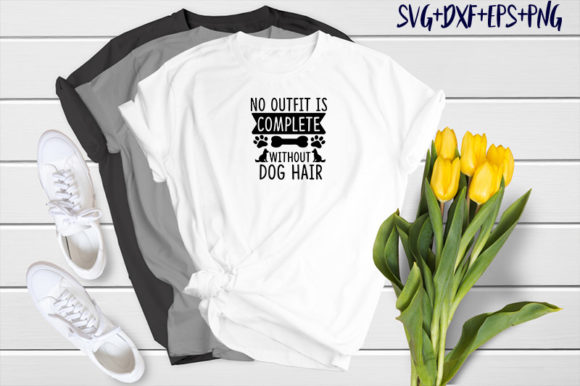
The phrase itself—“No Outfit Is Complete Without Dog Hair”—functions like a brand’s inside joke with its customers. It works exceptionally well on product labels, especially for items that are themselves part of a dog’s daily life. I’ve placed similar sentiments on the belly bands of coffee bag labels (pet-friendly café), on the front of thank-you cards tucked into e-commerce orders, and as a recurring motif on social media templates.
In terms of application, the file pack includes SVG, DXF, EPS, and PNG formats. For a packaging designer, that’s non-negotiable. The SVG and EPS let you scale for a storefront window decal or shrink for a tiny lip-balm label without losing quality. The PNG with transparency is ready to drop into product mockup scenes, Canva layouts, or social media graphics. More than once I’ve used a similar clean PNG to quickly test a slogan placement on a t-shirt mockup before committing to a screen-printing order.
What Kind of Small Business Benefits Most?
Not every graphic suits every product line. This one leans casual, personal, and a bit whimsical. The strongest fits I see:
- Dog grooming salons — on appointment cards, retail product displays, and staff aprons.
- Handmade dog accessory shops — bandana packaging, collar tags, and eco-friendly poly-mailer inserts.
- Pet bakeries — window decals, cookie bag labels, and seasonal gift sets.
- Boutique pet supply stores — shelf talkers, loyalty card stamps, and reusable tote bag designs.
- Dog-centric event planners — adoption day signage, puppy party favor tags, and photo booth props.
- Small crafters — scrapbooking elements, vinyl decals for dog-mom tumblers, and iron-on transfers for T-shirts.
I wouldn’t typically place this on a high-end minimalist luxury brand that relies on negative space and delicate serif fonts. But for any business that wants to feel like a trusted, friendly neighbor, this design is a short-cut to a professional branding detail that creates a stronger emotional connection with customers.
Bringing the Dog Hair Humor to Real Product Packaging
Let me walk through a real case from my studio. I worked with a small handmade candle company that launched a limited-edition “Cozy Dog Days” collection. They used a very similar attitude-driven phrase on the front of a matte glass jar. The result? The collection sold out at three local markets because the label made people laugh and nod before they even smelled the soy wax. That’s the power of a well-chosen phrase graphic on packaging design.
With Dog Design No Outfit is Complete Without Dog Hair, you’re not just buying a file; you’re buying a storytelling shortcut. Here are a few ways I’d personally deploy it in a real business project:
- Thank-you cards — 5" x 7" flat cards printed on textured cream paper, with the graphic centered above a short handwritten note. It turns a transactional moment into a shared laugh.
- Product labels for dog biscuits — a circular sticker with the phrase wrapping around the outer edge, used as a seal on a brown paper bag. Works for both dry and fresh-baked treats.
- Hang tags for grooming products — a double-sided tag strung with natural twine, where one side lists ingredients and the other carries this statement. It reinforces the handmade, honest character of the brand.
- Vinyl decals — cut from the DXF or SVG file, applied to shop windows, mirrors, or water bowls. The clean vector paths allow clean weeding for detailed lettering.
- T-shirt designs — placed on a crewneck sweatshirt or a canvas tote bag as a front-center slogan. The PNG is great for online mockups; the vector is essential for screen separations.
Where to Use This Graphic Carefully
Every design asset has limitations. Because this graphic is highly typographic and slogan-driven, it can become visual noise when crowded. I avoid placing it on very small labels where text hierarchy is already fighting for space, or on packaging where critical legal information (ingredient panels, allergen warnings) must remain completely dominant. It also doesn’t belong on formal corporate branding—a veterinary clinic might use it on a casual newsletter but probably not on a prescription label.
If your brand already uses dense background patterns or photography, test the graphic on a low-contrast background first. The phrase might need a subtle solid banner behind it to maintain readability. For luxury minimalist brands, consider using only the dog hair sentiment in a tiny, subtle placement—like an inside neck label or a footer on a website—rather than a bold front-facing statement.
Practical Designer Checks Before You Send to Print or Publish
Here’s my standard checklist when incorporating a new design asset into real client work, and these apply directly to this file set:
- Test on a physical mockup. Print the PNG on copy paper first, hold it at arm’s length, and tape it to a jar, box, or t-shirt. Does the mood hold up in physical form? Does the sizing feel intentional?
- Examine the vector paths. Open the SVG or EPS in a vector editor. Check that text has been converted to outlines (so fonts aren’t lost) and that compound paths are clean. A quick click test reveals if tiny details will survive a vinyl cutter or a stamp making process.
- Preview in black and white. Some print methods—like foil stamping or single-color screen printing—require a true monochrome version. The graphic should still read clearly without color dependency.
- Scale down aggressively. Does it work at 1.5 inches wide on a paw-print sticker? If the letter spacing tightens to the point of illegibility, you may need a simplified version for micro-labels.
- Place next to competitor packaging. Go to a shelf display—real or imagined—and see if this design feels cohesive but distinct. Does it make the product feel more artisanal and intentional?
- Test with different font families. Since you’ll likely pair this phrase graph with your own brand font, see how it interacts with a clean sans-serif (workhorse readability), a soft serif (homemade warmth), a flowing script (elevated boutique), or a sturdy slab (rustic edge). The graphic should complement, not clash.
- Review the commercial license. Before using it on any item you sell—whether packaged dog treats, T-shirts, or client deliverables—confirm the commercial license terms. The included file formats suggest the designer intended wide use, but always verify that it covers physical product sales, not just personal projects.
- Check transparent PNG edges. If you’re layering this on a busy photo, a leftover semi-transparent fringe can look unprofessional. A quick layer mask pass removes any faint halo.
Why This File Pack Supports Consistent Brand Identity
Small businesses often underestimate the power of a single repeatable graphic. When you use Dog Design No Outfit is Complete Without Dog Hair across multiple touchpoints—a t-shirt, a sticker, a social media post, a packaging insert, a thank-you card—you’re not being repetitive; you’re building recognition. That consistency improves customer trust faster than changing your visual theme every quarter. The fact that this kit arrives in four of the most requested formats (SVG, DXF, EPS, PNG) means you can maintain that consistency from web store to merchandise booth to print-at-home craft projects without a drop in quality.
Role in Social Media Graphics and Promotional Campaigns
I often use assets like this as the hero element for a photo-based social media graphic. A lightly blurred close-up of a golden retriever, with this phrase overlaid in a semi-transparent circle frame, instantly creates an on-brand post that dog lovers will share. For boutique owners running a seasonal campaign—say a “Furry Friend February” promotion—the graphic can unify all promotional banners, Instagram Stories, and even in-store signage. It reduces the need for a dedicated graphic designer every time you schedule a post, because you already have a recognizable anchor.
The editorial design potential extends to printable newsletter headers or event flyers. Because the PNG file sits on a transparent background, it layers beautifully over lightly textured paper backgrounds, keeping the overall layout clean and professional. Just be mindful of visual hierarchy: the graphic should support your key message, not overpower a sale announcement or a date.
Building Stronger Shelf Appeal and Customer Connection
At a farmers’ market or craft fair, you have about three seconds to catch a passerby’s eye. A product label that features a relatable, humorous statement like this one stops people mid-stride. I’ve seen it happen: a shopper reads the phrase, chuckles, and immediately picks up the jar. That’s a more effective conversion tool than any sterile, purely descriptive label. This graphic asset gives you that micro-moment of connection, which then opens the door to your product’s quality, ingredients, and story.
If you’re selling T-shirts, the psychology works similarly. Someone sees the design on a display tee at your booth, laughs because their own hoodie is covered in fur, and feels an instant affinity. That’s how small-batch merch lines build loyal repeat buyers—not just on the design’s aesthetic, but on the shared truth it represents.
Final Thoughts from a Brand Designer’s Desk
Dog Design No Outfit is Complete Without Dog Hair is not a trend-chasing piece that will feel stale by next season. Its humor is universal to dog households, and its typographic energy fits the current modern design appetite for genuine, unpolished charm. It’s ready to be dropped into a Canva template or layered into a complex packaging die line. The multiple file formats make it a practical addition to any small business’s asset library, especially for those who frequently move between digital mockups and physical production.
If you’re a local business owner, a handmade seller, or a social media manager for a pet-friendly brand, keep this graphic in your back pocket. It’s one of those rare finds that transforms a simple product interaction into a moment of brand delight. Just remember to test it on real surfaces, check your licensing, and let the humor do the talking.